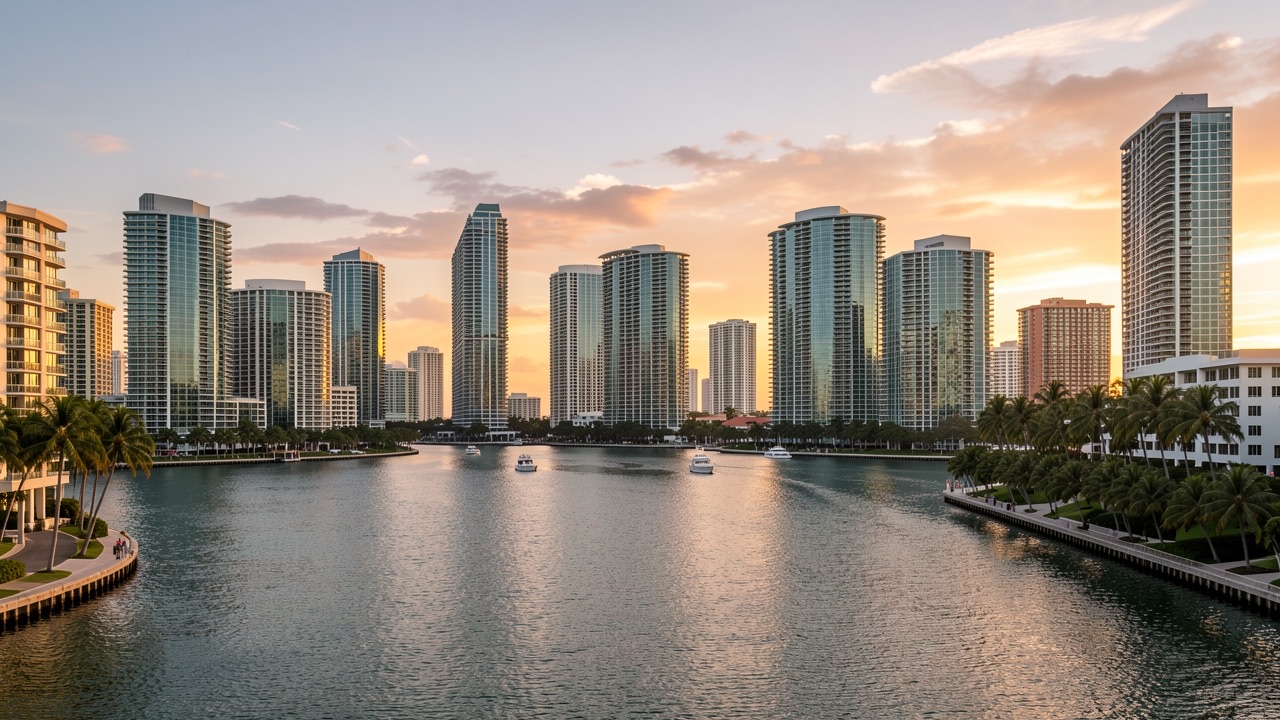
Miami Real Estate Guide 2026: Condos, Homes & Neighborhoods
Miami real estate in one guide: how the City of Miami and its neighboring cities differ, the main property types from Brickell high-rises to Coconut Grove single-family homes, what to check on condos and waterfront property, how Miami-Dade compares with Broward, and a step-by-step plan for buying or selling in 2026. Written by The Home Owners Listing Team at RESF.
Miami's market in numbers
According to MIAMI REALTORS®, September 2026, Miami-Dade County looked like this:
- Miami-Dade single-family homes: median sale price $692,000, up 4.06% from a year earlier, with 5.1 months of supply.
- Miami-Dade condos: median sale price $417,090, down 0.69% from a year earlier, with 12.3 months of supply.
Single-family homes are near balance and still gaining value. Condos have a large supply, more than a year at the current sales pace, which gives condo buyers time and leverage and asks condo sellers to price carefully. County numbers blend very different markets, though: a Brickell one-bedroom, a Coconut Grove house and a bayfront estate do not move together, so price from recent closed sales of truly similar properties.
Miami vs. Fort Lauderdale
Many buyers compare the two. In the same MIAMI REALTORS® September 2026 report, Broward single-family homes had a median of $641,500 (+2.39%) and 4.2 months of supply, while Broward condos had a median of $235,000 (−14.55%) and 10.2 months of supply. In short:
- Single-family: Miami-Dade's median was higher and rising faster; both counties were near balance.
- Condos: Miami-Dade's condo median was much higher than Broward's and nearly flat, while Broward condo prices fell; both counties had large condo supply.
The right choice depends on where you work, how you want to live and what you want to own. Our Fort Lauderdale real estate guide covers the Broward side, and our 1-minute South Florida neighborhood quiz can help you narrow the options.
Neighborhoods and property types
"Miami" can mean the City of Miami or the whole metro area. Miami Beach, Coral Gables, Key Biscayne and Aventura are separate cities with their own rules, permits and tax rates, so confirm which city a property is in. Inside the City of Miami:
- Brickell and Downtown: the high-rise core, with condos ranging from older buildings to new luxury towers, close to the financial district and Metrorail and Metromover.
- Edgewater and the Upper Eastside: bayfront condo towers along Biscayne Bay and, further north, older single-family streets and the MiMo district's mid-century buildings.
- Coconut Grove: one of Miami's oldest areas, with tree-lined single-family streets, bayfront homes, townhomes and low-rise condos near the village center. See our Coconut Grove page.
- Little Havana, Coral Way and nearby areas: older single-family homes, duplexes and small multifamily buildings, often at lower prices per square foot than the waterfront.
- Wynwood and Midtown: mixed-use areas with newer condos and apartments near the arts district.
Outside the city limits, see our pages on Aventura and Miami real estate.
Condos and new construction
Condos are the largest part of Miami's market. Before you buy a resale unit, ask for:
- The milestone structural inspection report and any required repairs. Since Florida's 2022 condominium safety law, buildings three stories or taller need these inspections periodically.
- The structural integrity reserve study, budget and reserve balance.
- Recent meeting minutes and any planned or approved special assessments.
- Rules on rentals, pets, parking and renovations, and any buyer approval process.
Those documents often explain why two similar units list at very different prices, and they are even more important when supply is high. For new or pre-construction condos bought from a developer, read the offering documents carefully. Florida law gives buyers of new condominium units a 15-day period to cancel after signing the contract and receiving the required documents, and the contract will spell out deposit amounts, escrow terms and delivery dates. Ask about association fees once the building is complete and what is included. See reasons to consider buying a condo.
Waterfront and luxury homes
Miami's waterfront runs from bayfront condo towers to single-family homes on Biscayne Bay, canals and the Miami River. For a home with a dock, check the route to open water, fixed bridges and their clearance, water depth, seawall and dock condition, and the property's elevation and flood history. High-end buyers should also expect detailed questions about insurance, since coverage for expensive coastal homes can take time to place. Our video guide to waterfront homes walks through the full checklist, and this post covers more affordable waterfront options. For luxury representation, see our luxury services.
Insurance, flood zones and property taxes
- Insurance: get homeowners and windstorm quotes before you are under contract. A wind mitigation inspection can lower premiums, and older homes often need a 4-point inspection. For condos, ask what the master policy covers and what your unit policy must cover.
- Flood: much of coastal Miami-Dade is in higher-risk flood zones. Check the FEMA flood map for the exact address; lenders require flood insurance in zones starting with A or V. An elevation certificate helps price the policy. Florida sellers must provide a flood disclosure; see what you must disclose before selling your home.
- Property taxes: homes are reassessed after a sale, so budget from your price, not the seller's bill. On a primary residence, the Florida homestead exemption can reduce taxable value by up to $50,000, and the Save Our Homes cap limits yearly increases in a homestead's assessed value. File with the Miami-Dade Property Appraiser. Florida has no state personal income tax. See our Florida Amendment 3 explainer.
Selling a home in Miami
- Get a local valuation. Check what your home is worth, then let us refine it with recent closed sales in your building or neighborhood. Read why an agent's valuation beats an algorithm.
- Prepare. Follow our video post Prepare Your Home for Sale: Step-by-Step Guide.
- Condo sellers: have the building file ready. With a year of condo supply, buyers compare buildings closely.
- Disclose. Known material defects and the Florida flood disclosure.
- Market to the right buyers, including buyers relocating from other states and countries, and review offers on terms as well as price.
The complete plan is in Sell Your South Florida Home: A Strategic Guide.
Buying in Miami
- Get pre-approved and budget for insurance, flood coverage, taxes and association fees. See why pre-approval matters and how rate changes affect South Florida buyers.
- Confirm the city (Miami, Miami Beach, Coral Gables and so on), then the property type.
- Read condo documents before you tour seriously, and use the high supply to negotiate.
- Inspect, including wind mitigation and, for waterfront homes, the seawall and dock. Read why you shouldn't waive a home inspection.
Investing? Read key questions to ask before buying investment property. First-time buyer? Start with 7 signs you're ready to buy and our buyer glossary. Relocating? Read our Florida moving guide.
Before you make an offer in Miami: a quick checklist
- Which city is it in? Confirm the municipality, because permits, rules and tax rates differ between Miami, Miami Beach, Coral Gables and other cities.
- For a condo: inspection reports, reserve study, budget, minutes, assessments, and rental and pet rules.
- Real monthly cost: mortgage, insurance quote, flood coverage, estimated taxes at your price and association fees.
- Permit history: additions, enclosures, pools and generators should match the permit record.
How we work with you
The Home Owners Listing Team, based in Fort Lauderdale, works with buyers and sellers across Miami-Dade, Broward and Palm Beach, in English and Spanish. We start with your goals and numbers, then give you a written plan for price, timing and preparation. See why working with a local South Florida team matters. Also compare our guides to Hollywood, Fort Lauderdale, Davie and Weston.
Frequently asked questions
Is Miami a buyer's or seller's market in 2026?
For single-family homes, close to balanced: 5.1 months of supply and a median of $692,000, up 4.06% (MIAMI REALTORS®, September 2026). For condos, buyers have the edge, with 12.3 months of supply and a median of $417,090.
Is Miami more expensive than Fort Lauderdale?
By county medians, yes. In September 2026 the Miami-Dade single-family median was $692,000 against $641,500 in Broward, and the Miami-Dade condo median was $417,090 against $235,000 in Broward (MIAMI REALTORS®, September 2026).
What should I check before buying a Miami condo?
The milestone inspection report, structural integrity reserve study, budget and reserves, recent minutes, planned assessments, and the rules on rentals, pets and renovations.
Can I cancel a pre-construction condo contract?
Florida law gives buyers of new units from a developer 15 days to cancel after signing and receiving the required documents. After that, the contract terms govern, so review them with your agent and attorney.
Do I need flood insurance in Miami?
If the home is in a high-risk FEMA flood zone and you have a mortgage, your lender will require it. Many owners in lower-risk zones carry it anyway. Check the exact address and get a quote early.
Buying or selling in Miami?
Talk with The Home Owners Listing Team at RESF for an honest look at value, timing and the right property for your goals.
Market figures: MIAMI REALTORS®, September 2026. This guide is general information, not legal, tax or insurance advice; confirm details for a specific property with the appropriate professional.