Fort Lauderdale Real Estate Guide 2026: Buy, Sell & Neighborhoods
Fort Lauderdale real estate in one guide: how the city's housing is laid out, what changes when you buy on the water or in a condo, how insurance, flood zones and property taxes affect the real cost of owning, and a step-by-step plan for buying or selling in 2026. Written by The Home Owners Listing Team, a Fort Lauderdale team at RESF.
Fort Lauderdale's market in numbers
Fort Lauderdale is the county seat of Broward County, so the most reliable broad numbers come from the county-wide report. According to MIAMI REALTORS®, September 2026:
- Broward single-family homes: median sale price $641,500, up 2.39% from a year earlier, with 4.2 months of supply.
- Broward condos: median sale price $235,000, down 14.55% from a year earlier, with 10.2 months of supply.
Those two lines tell the story of the local market right now. Single-family homes are close to balanced: about four months of supply means well-priced houses still sell, but buyers have time to compare. Condos have much more inventory, so condo buyers have negotiating room and condo sellers need sharp pricing and a clean building file. County medians mix very different properties, though. A dry-lot ranch home west of I-95 and a deep-water home on the Las Olas Isles are different markets, which is why a pricing opinion for your street matters more than any headline number.
Neighborhoods and property types
Fort Lauderdale is a patchwork of distinct neighborhoods, each with its own housing stock. A useful way to compare them is by property type rather than by a "best" list, because the right fit depends on your budget, how you will use the home and how much upkeep you want.
- Downtown and Flagler Village: mostly mid-rise and high-rise condos plus some townhomes, close to Las Olas Boulevard, the Riverwalk along the New River and the downtown Brightline station.
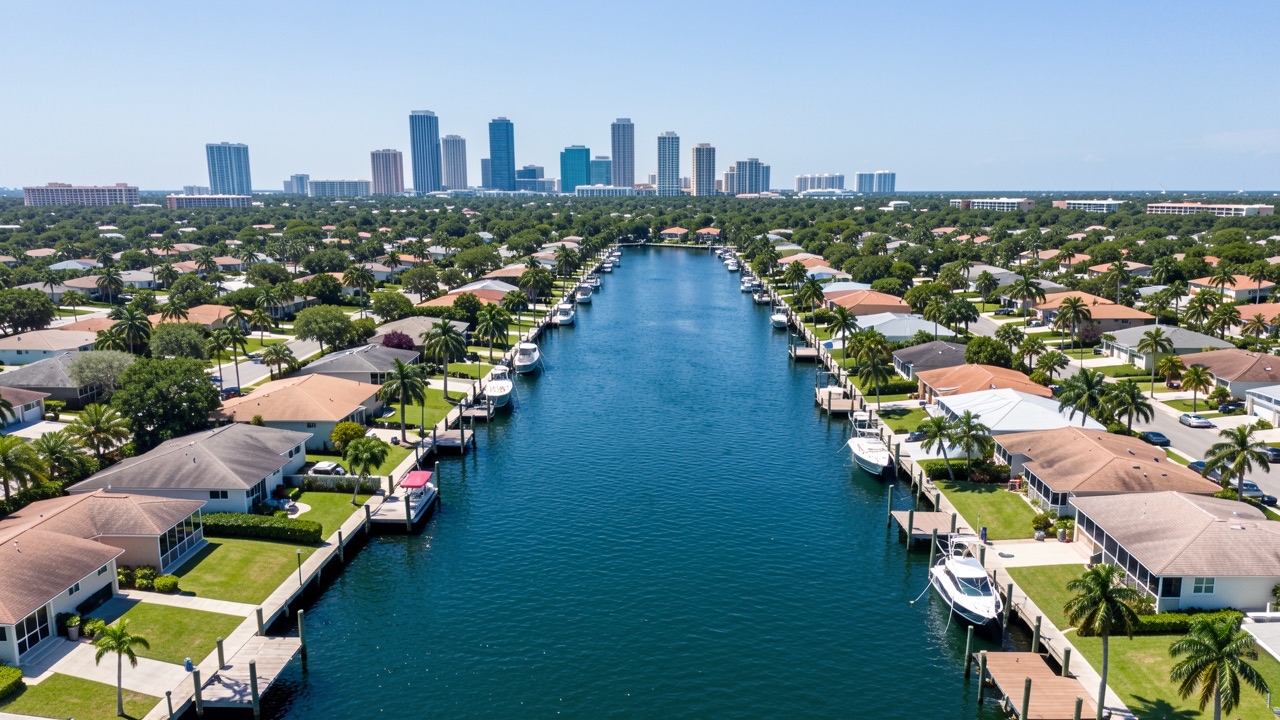
- Las Olas Isles, Rio Vista and Harbor Beach: some of the city's best-known waterfront single-family streets, with deep-water canals, private docks and homes ranging from mid-century houses to new construction.
- Victoria Park, Tarpon River and Sailboat Bend: older, close-in neighborhoods with renovated cottages, townhomes and newer infill homes near downtown.
- Coral Ridge, Bay Colony and Imperial Point: established single-family areas in the northeast, many on canals, plus dry-lot streets that cost less per square foot.
- Galt Ocean Mile and the beach: oceanfront and near-ocean condo towers along A1A, where building age, reserves and assessments drive value as much as the view.
- Oakland Park and Wilton Manors (next door): separate cities just north, where many buyers look for a single-family home, often with a pool, at a lower entry price than the east side of Fort Lauderdale. A pool adds enjoyment and can add appeal at resale, but budget for upkeep, safety barriers and insurance.
For a closer look at specific areas, see our video post Top Ten Neighborhoods in Fort Lauderdale for 2026. Not sure where you fit? Our 1-minute South Florida neighborhood quiz matches your priorities to areas worth touring.
Condo or single-family?
The gap between the condo and single-family numbers above is the biggest decision point for many Fort Lauderdale buyers.
Condos offer a lower entry price, less exterior upkeep and, in many buildings, water views and amenities. The trade-off is that you are buying into a shared budget. Since Florida's 2022 condominium safety law, buildings three stories or taller need periodic milestone structural inspections and a structural integrity reserve study, and associations must fund the reserves those studies call for. Before you make an offer, ask for the latest inspection reports, the reserve study, the current budget, recent meeting minutes and any planned or approved special assessments. Those documents often explain why two similar units list at very different prices. Our post on reasons to consider buying a condo covers the upside.
Single-family homes give you land, privacy and full control over upgrades, but you carry the roof, windows, pool, landscaping and insurance on your own. Roof age and the type of hurricane protection on windows and doors have a direct effect on what an insurer will charge, so they belong at the top of your inspection list. If you want a gated setting without a high-rise, also look at townhome and villa communities with an HOA; read our piece on why Floridians like gated communities.
Buying on the water
Fort Lauderdale is often called the "Venice of America" because of its canal system, and waterfront homes are a market of their own. Two homes on the same street can differ widely in value because of details buyers do not always see in the photos:
- Ocean access and bridges: how many fixed bridges sit between the dock and the ocean, and their clearance, decides what kind of boat the home can serve.
- Canal width and depth: wider, deeper water suits larger boats and usually commands a premium.
- Seawall and dock condition: ask when the seawall was built or last repaired. Broward County and the City of Fort Lauderdale have adopted minimum seawall elevation standards, so a wall that needs work can be a major cost.
- Elevation and flood history: the finished-floor elevation and any past flood claims affect insurance and resale.
Our video guide to Fort Lauderdale waterfront homes for sale goes deeper, and this post on more affordable waterfront options covers lower price points along the coast.
Insurance, flood zones and property taxes
In South Florida the monthly cost of a home is more than principal and interest. Budget for these early:
- Homeowners and windstorm insurance: get a quote before you are under contract, not after. A wind mitigation inspection can document features such as roof straps and impact windows that may lower premiums, and insurers often ask for a 4-point inspection on older homes.
- Flood zone and flood insurance: check the FEMA flood map for the address. Lenders require flood insurance for homes in high-risk zones (zones starting with A or V), and many owners outside those zones buy it anyway. An elevation certificate helps price the policy. Florida sellers must also give buyers a flood disclosure; see what you must disclose before selling your home.
- Property taxes: a home is reassessed when it sells, so do not budget from the seller's tax bill. If the home becomes your primary residence, the Florida homestead exemption can reduce the taxable value by up to $50,000, and the Save Our Homes cap limits yearly increases in the assessed value of a homestead. File with the Broward County Property Appraiser. Florida also has no state personal income tax. For recent changes, see our Florida Amendment 3 explainer.
- HOA or condo fees: ask what the fee covers (insurance, water, cable, reserves) and whether an increase or assessment is planned.
Selling a home in Fort Lauderdale
Most sellers start with one question: what is my home worth? Online estimates are a starting point, but they do not see your renovation, your water frontage or the condition of the house next door. A useful price opinion compares your home with similar homes that actually closed in the last few months, not only with what is listed online today, and gives you a range rather than a single number.
- Get a local valuation. Check what your home is worth, then let us walk the property and refine the range. Read why an agent's valuation beats an algorithm.
- Prepare the home. Fix small defects, declutter and handle curb appeal. Our video post Prepare Your Home for Sale: Step-by-Step Guide lays out the order.
- Gather your documents. Permits, roof and system ages, insurance details, HOA or condo documents and your disclosures. Condo sellers should have the inspection and reserve reports ready, because informed buyers will ask.
- Market and show. Professional photos, accurate square footage and a clear description of water access or upgrades get the right buyers through the door.
- Negotiate and close. Price is only one part of an offer; financing, inspection terms and timing matter too.
For the full plan, see Sell Your South Florida Home: A Strategic Guide.
Buying a home in Fort Lauderdale
- Know your numbers. Get pre-approved and price in insurance, flood coverage, taxes and fees. See why pre-approval matters and how rate changes affect South Florida buyers.
- Pick a property type first, then neighborhoods. Condo, townhome, dry-lot house or waterfront: each narrows the search quickly.
- Tour with the documents in mind. Ask about roof age, flood zone, seawall condition or condo reserves before you fall in love with a kitchen.
- Inspect. A general inspection plus wind mitigation and, where relevant, seawall, pool or sewer-line checks. Read why you shouldn't waive a home inspection.
- Close with a local team. Florida contracts have firm deadlines for inspections, financing and condo document review.
Moving from another state? Start with our guide to moving to Florida from up north and keep our South Florida buyer glossary handy. Wondering if now is the time? Read 7 signs you're ready to buy.
How we work with you
The Home Owners Listing Team is based at 2440 E Commercial Blvd in Fort Lauderdale and works with buyers and sellers across Broward, Miami-Dade and Palm Beach, in English and Spanish. We start every conversation with your goals and your numbers, then give you a written plan: value or budget, timing, preparation and the next step. See why working with a local South Florida team matters.
Looking at nearby cities too? Compare our guides to Weston, Davie, Hollywood and Miami.
Frequently asked questions
Is Fort Lauderdale a buyer's or seller's market in 2026?
It depends on the property type. In September 2026, Broward single-family homes had 4.2 months of supply, which is close to balanced, while Broward condos had 10.2 months, which favors buyers (MIAMI REALTORS®, September 2026). Your specific street and price range can differ from the county picture.
How do I find out what my Fort Lauderdale home is worth?
Start with an online estimate, then ask a local agent for a comparative market analysis based on recent closed sales of similar homes nearby. Condition, water frontage and upgrades can move the value well beyond what an algorithm shows.
What should I check before buying a condo?
Ask for the milestone inspection report (if the building needs one), the structural integrity reserve study, the budget, recent minutes and any planned special assessments. Also confirm the rules on rentals, pets and parking.
Do I need flood insurance in Fort Lauderdale?
If the home is in a high-risk FEMA flood zone and you have a mortgage, your lender will require it. Outside those zones it is optional, but many owners carry it. Check the flood map for the exact address and get a quote early.
What does a waterfront home buyer need to check?
Ocean access, the number and clearance of fixed bridges, canal width and depth, seawall and dock condition, and the home's elevation and flood history.
Buying or selling in Fort Lauderdale?
Talk with The Home Owners Listing Team at RESF. We'll give you an honest look at value, timing and what it will take to reach your goal.
Market figures: MIAMI REALTORS®, September 2026. This guide is general information, not legal, tax or insurance advice; confirm details for a specific property with the appropriate professional.